Ask any local SEO expert what moves the needle in 2026 and reviews come up fast. But how much do reviews actually affect your rankings — and which parts of a review matter most? The data is clearer than ever, and the answer will change how you think about reviews: they're not a "nice to have," they're one of the largest ranking factors you can directly influence.
Yes — reviews are a major ranking factor
For Google's local "map pack" (the three businesses shown on the map for local searches), review signals account for roughly 20% of the ranking decision. That puts reviews second only to your Google Business Profile itself. And unlike many ranking factors — your business's age, or how many links point to your site — reviews are something you can actively grow starting today.
But "review signals" isn't just your star rating. It breaks down into several distinct parts, and understanding them is the key to using reviews strategically.
The 4 review signals that drive rankings
1. Review quantity. More genuine reviews generally means more visibility. There's no magic number, but businesses that consistently out-review their local competitors tend to out-rank them. Quantity signals that you're an established, active business worth showing.
2. Review velocity & recency. A steady flow of new reviews signals a current, operating business. This matters twice over: 73% of consumers only trust reviews written in the last 30 days. A profile with 300 reviews but nothing in the last six months looks stale to both Google and customers. Velocity beats a one-time pile.
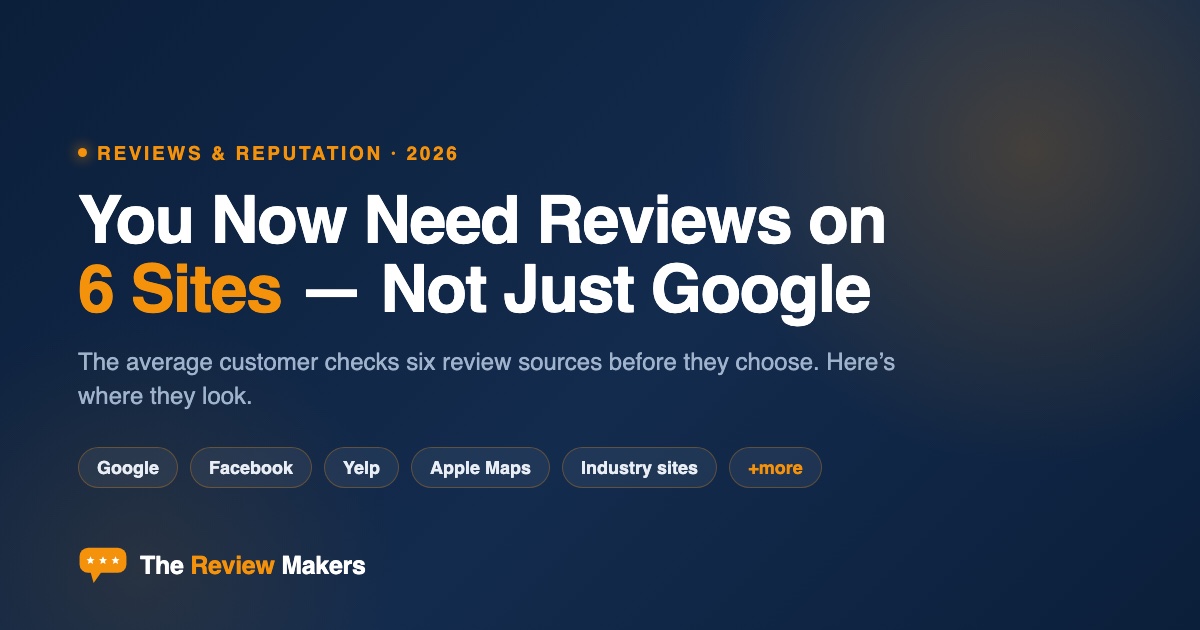
3. Review diversity. Reviews across multiple platforms (Google, plus the sites your industry uses) look more natural and broaden where customers find you. Consumers now check an average of six review sites before deciding, so diversity isn't just a ranking signal — it's a discovery strategy.
4. Review keyword relevance. This is the one most businesses miss. The words inside your reviews now count. When review text matches what a searcher typed, it boosts relevance — one analysis found "review keyword relevance" accounts for around 22.8% of the variance among businesses ranking in the top 10. When customers naturally mention your services and city ("great plumber in Austin," "same-day AC repair"), it reinforces exactly what you want to rank for.
Why reviews work so well as a ranking signal
Google's whole goal is to recommend businesses people will be happy with. Reviews are the most direct, hardest-to-fake evidence of customer satisfaction it has. A business with many recent, detailed, well-answered reviews is exactly what Google wants to put in front of searchers — so the algorithm rewards it. That alignment is why reviews have stayed a top factor year after year while other tactics come and go.
Ratings affect clicks, not just rankings
Even when two businesses rank side by side, the one with the higher rating and more reviews wins the click. Ranking is only half the battle; the rating determines who actually gets chosen. Consider:
- 54% of shoppers avoid businesses rated below 4 stars.
- Customers will spend up to 31% more with a business that has excellent reviews.
- Displaying verified reviews on your website can lift conversion rates significantly.
So reviews compound: they help you rank, help you get clicked, and help you convert — all from the same source. Few marketing investments touch all three stages of the funnel at once.
Reviews and the rise of AI search
There's a newer reason reviews matter for visibility: AI assistants like ChatGPT, Gemini, and Perplexity now drive a large and growing share of local discovery, and they lean heavily on reviews to decide which businesses to recommend. The same signals that help you rank on Google — volume, recency, and specific language — also make you more likely to be named by AI. Investing in reviews is increasingly a bet on both traditional and AI search at once.
How to turn reviews into rankings
- Ask every customer, consistently. Velocity and quantity both come from a steady asking habit. Around 77% of customers leave a review when asked.
- Encourage specific, natural language. You can't script reviews, but you can prompt customers to mention what they valued — which naturally surfaces service and location keywords.
- Diversify platforms to match your industry (Google first, then the sites your customers actually use).
- Respond to everything. Responses add fresh, keyword-relevant text to your profile and signal an active business — a ranking behavior in its own right.
- Keep it genuine. Fake reviews and manipulation get filtered — and a suppressed profile ranks nowhere. Compliant, real reviews are the only strategy that compounds over time.
A common mistake: treating reviews as a one-time project
Many businesses run a "get reviews" push, collect 30 reviews, and stop. Three months later their velocity is zero, their newest review is aging, and competitors who kept going have passed them. Reviews are a flywheel, not a campaign. The businesses that win local search treat review generation as an always-on process, the same way they treat answering the phone.
How reviews fit into the bigger local SEO picture
Reviews don't operate in a vacuum. They amplify a well-optimized Google Business Profile, consistent citations (your NAP across directories), and strong local content on your website. Think of it as a system: your profile and citations make you eligible to rank, and your reviews push you up the list. Neglect either side and you leave rankings on the table. That's why review management and local SEO belong in the same strategy — each makes the other work harder.
Frequently asked questions
Do reviews actually affect Google rankings? Yes. Review signals account for roughly 20% of local map-pack ranking decisions — second only to your Google Business Profile. Quantity, recency, diversity, and the keywords inside reviews all contribute.
Which matters more: star rating or number of reviews? Both matter, and they do different jobs. A higher review count (especially recent ones) helps you rank, while a higher rating helps you get clicked and chosen once you appear. You need volume, recency, and a strong average together.
How do reviews help me rank for specific keywords? When customers mention your services and location in their reviews ("emergency plumber in Austin"), that text boosts your relevance for those searches. "Review keyword relevance" is a top-tier factor — so encouraging customers to describe what they valued pays off.
Do reviews on sites other than Google help my SEO? Yes. Review diversity across the platforms your industry uses looks natural to Google and broadens where customers discover you — and consumers check an average of six review sites before deciding.
How quickly do reviews improve rankings? There's no instant switch, but businesses that start a steady, compliant review flow typically see improved visibility within one to three months as velocity, recency, and keyword relevance build. Consistency is what compounds.
Do it for me
We connect the dots between reviews and rankings. Our review management service builds a steady flow of genuine reviews across the platforms that matter — starting with Google — while our local SEO service turns that review authority into map-pack visibility and more calls.
Want to know how your reviews stack up against the businesses out-ranking you? Get a free reputation audit — we'll benchmark you and show you the fastest wins.
Sources: Whitespark Local Search Ranking Factors 2026; BrightLocal Local Consumer Review Survey 2026; Harvard Business School research (Luca) on ratings and revenue. Verified-customer review generation only — no fake reviews, ever.